


Is It Burnout or Is It Us? Ending the Tug-of-War
When you feel distant from your partner, it's often both burnout and the relationship pulling at once. Here's a simple way to tell which one is leading, and how busy couples can start pulling together again.

When Work Becomes the Third Person in Your Relationship
Demanding careers rarely end relationships in one dramatic moment. They wear them down quietly, but small, low-effort moments of closeness can help busy couples find their way back to each other.

The Shame No One Talks About After an Affair
After an affair, shame often keeps both partners stuck: one shuts down, the other quietly wonders what’s wrong with them. Here’s how couples step out of hiding and begin rebuilding trust.

Why One Bad Thursday Can Undo a Whole Good Week: The exhausting pendulum of inconsistent closeness
For many couples, the hardest part isn’t the big blowups — it’s the exhausting swing between real closeness and sudden distance. A connected Sunday doesn’t feel safe if it can unravel by Thursday.
This isn’t inconsistency; it’s chronic attachment panic. The way out isn’t a rule about tone at the door — it’s learning to name the cycle together, trust that a rupture doesn’t erase the bond, and say the scared thing instead of the sharp one.

The Silent Relationship Killer: Why "It's Fine" Usually Isn't
For many Asian couples, this is a heavy reality. While honoring family is a core value, it can feel like parents are an invisible third party in your relationship. This leaves one partner feeling sidelined and the other caught in an impossible squeeze.
When you don’t feel chosen, loneliness grows. This silence snowballs into resentment, eroding your bond. The goal isn't to cut ties; it’s to become a team to redefine the boundaries.
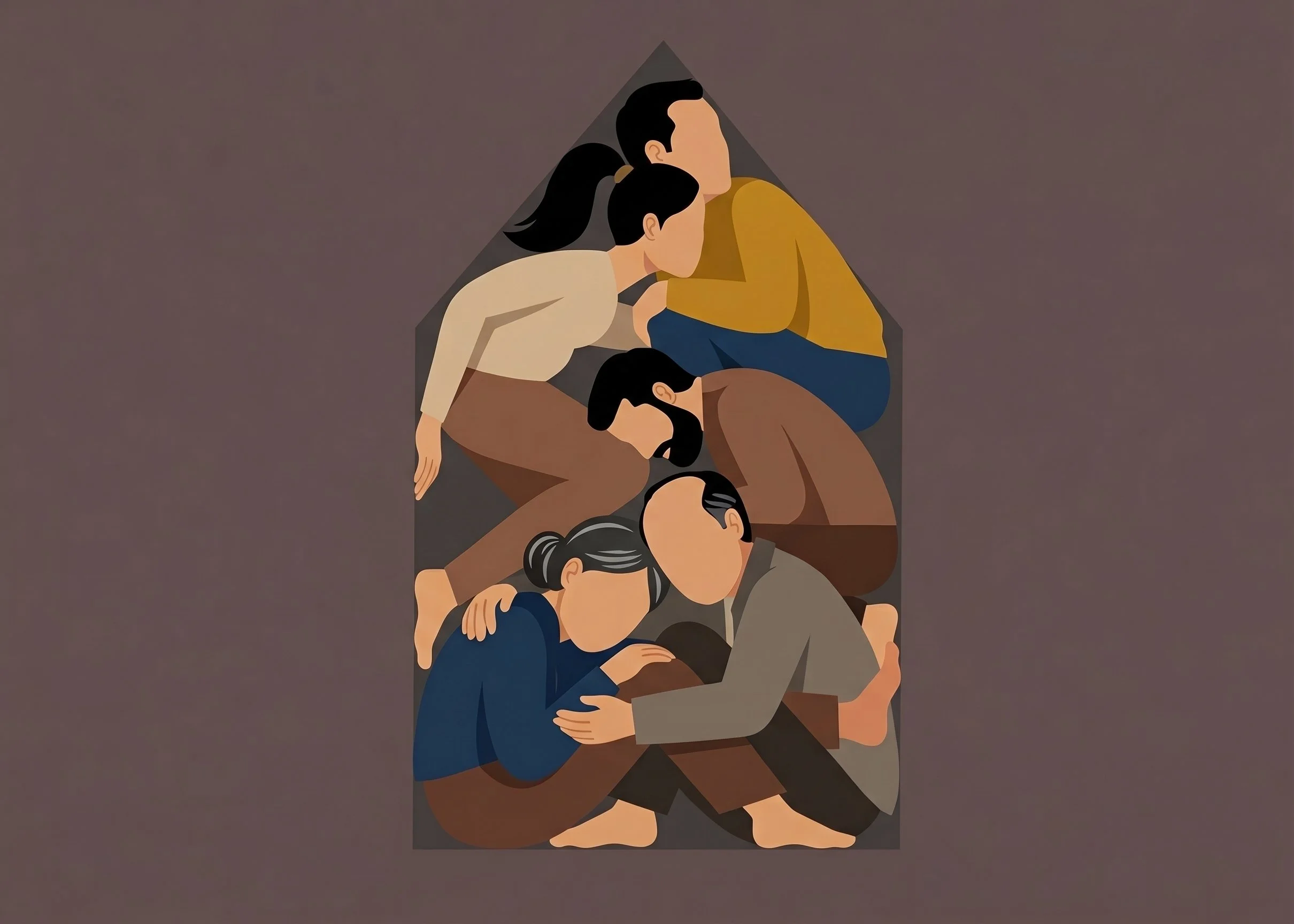
“Our marriage feels overcrowded by your parents.” —The Invisible Third Party: Navigating In-Laws Between Partners
For many Asian couples, this is a heavy reality. While honoring family is a core value, it can feel like parents are an invisible third party in your relationship. This leaves one partner feeling sidelined and the other caught in an impossible squeeze.
When you don’t feel chosen, loneliness grows. This silence snowballs into resentment, eroding your bond. The goal isn't to cut ties; it’s to become a team to redefine the boundaries.

"We never fight... so why do I feel so alone?" - The Transparent Wall Between Two Partners After Years of Being Together
"We still love each other, but we’ve become like roommates (變成家人)." It’s a phrase I hear often from couples who have traded their romantic 'sparkle' for the safety of stability. In this post, we explore the 'Quiet Starvation' of mutual withdrawal and how the principles of Dr. Sue Johnson’s Hold Me Tight can help you move out of the freeze and back into deep, vibrant connection.

The Weight of the "Unpayable" Debt within the Asian Home: Understanding Filial Guilt
When we feel resentment or anger, a deeply self-critical Filial Guilt hijacks our emotions, telling us we are 'ungrateful.' This post explores how to navigate the exhausting tug-of-war between honoring their sacrifice and acknowledging your own deep hurt. Learn three steps to move toward self-compassion and find safety within your own emotional experience.

"YOU NEVER LISTEN!" — Breaking the Conflict Cycle in Asian Couples
You never listen!" It’s the phrase that ends a hundred conversations but starts a thousand fights. For many Asian-American couples in NYC, this stuck pattern is about more than just communication—it’s unspoken needs. Learn how to break the cycle and find the connection underneath the noise.